FSSC 22000 Changes

FSSC 22000 is growing 10% per year with 32,000+ certificates worldwide.

New IT Tools for Data Sharing

Realtime Access to the Certification Status of FSSC Certified Organisations

FSSC ON-Site” has been launched, where organisations can subscribe for realtime access to the certification status of FSSC certified organisations, based on an annual fee, and receive notifications in case a certificate status changes. 

This tool can be used by any organisation to monitor their suppliers and integrate information into their own IT system through API, instead of regularly having to request up-to-date certificates from their suppliers. Companies such as Nestle and YUM! confirmed that they are keen to use this tool to save time in their supplier assessment process. 

Further information on FSSC ON-Site can be found on the FSSC website under the following link https://www.fssc.com/insights/discover-fssc-on-site-our-solution-for-real-time-access-to-fssc-22000-certification-status/

Certified Organisations Access to Audit and Certificate Data 

FSSC IN-Site” will be launched for certified organisations with more than 5 sites to monitor their performance through access to audit and certificate data and NCRs on the FSSC Assurance Platform based on the data uploaded by their Certification Body. 

Certified Organisations will then be able to also grant access to this data to their customers (retailers, industry partners, etc.) through “FSSC OUT-Site“. YUM! are supporting FSSC with the co-creation of FSSC OUT-Site and are planning on removing 2nd party auditing of their suppliers once they have access to their suppliers’ audit performance through this program. Similar programs must be in development by BRC and the like.

FSSC 22000 Version 6 Training, Additional Requirements & More

Training in V6 will be rolled out in July 2023 for relevant office staff (Head Office and ROs) and qualified FSSC auditors.

V6 includes additional requirements for the management of food loss and waste with the aim to contribute towards the UN Sustainable Development Goals to halve per capita global food waste by 2030. The new version also addresses quality control parameters and food safety and quality culture.

FSSC 22000 V6 certificates will show a QR Code provided by the Foundation FSSC to further enhance certificate authenticity.

Minimum audit duration for V6 will be 2 days and minimum audit report writing time will be 1 day (increased from previously 0.75 day).

The transition process from FSSC V5.1 to V6 is described in WI 54 and has been communicated to ROs, certified clients and applicants through the transition letter sent out end of April this year. Audits against FSSC V6 will commence on 1 April 2024.

FSSC 22000 KPIs to Monitor Certification Bodies

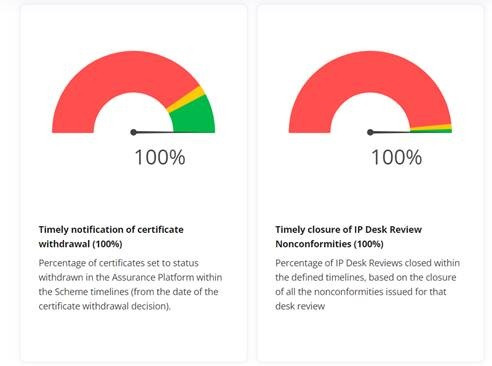
The Foundation FSSC is implementing a number of KPIs to monitor Certification Bodies performance. These are being trialled and will be fully implemented in the first quarter of 2024. Dashboards are already in place and monitored by Head Office on the FSSC Assurance Platform (see screenshot below).
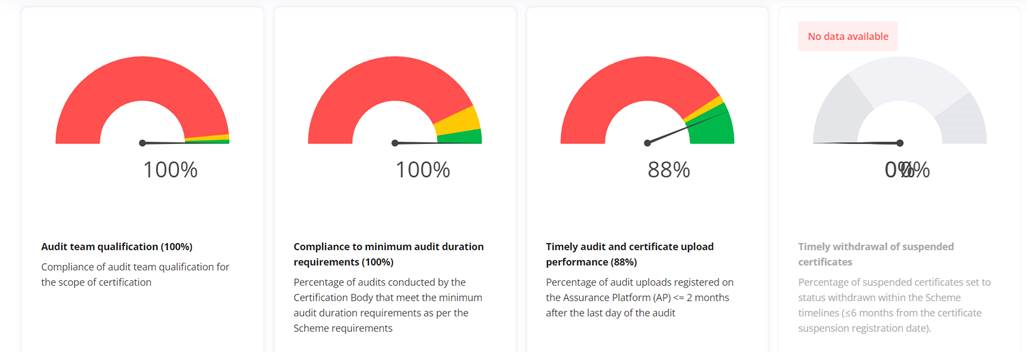
 

FSSC 22000 KPIs to monitor Certification body performance
Performance of Certification Bodies

How vulnerable is your organisation to Cyber Security Attacks?

Remote work options became essential for businesses during the COVID-19 period. During the same period, cyber-attacks escalated, praying on vulnerabilities in VPNs and cloud-based technologies. 

ISO/IEC 27001 for Information Security Management Systems provides a holistic risk-based approach to protecting your business and your team against cyber-attacks.

Now Three Categories

Two to three years ago, most organisations that asked us to audit their cyber security systems were either looking to ensure the risk to their business was being effectively mitigated or were being asked by their customers to attain information security certification as a requirement for future contracts. Increasingly, a third category is now emerging – businesses that have been hacked and suffered data loss through malware or ransomware attacks, and want to prevent future attacks.

And these threats are growing – particularly in critical sectors. A recent research report showed industrial control system based successful attacks increased by 44 percent, while breaches in the critical manufacturing sector rose by nearly 150 percent in the first half of 2020.

Remote Work, VPNs, and Cloud-Based Technologies

One of the key findings is that four of the most targeted vulnerabilities in 2020 involved remote work, VPNs, or cloud-based technologies. Many VPN gateway devices remained unpatched during 2020, with the growth of remote work options due to the COVID-19 pandemic challenging the ability of organisations to conduct rigorous patch management.

Multinational cyber security advisory groups recommend that organisations apply available patches for known vulnerabilities and implement a centralised patch management system.

Information Security

ISO/IEC 27001 for Information Security Management Systems, the internationally recognised standard for information security, provides a holistic, risk-based approach to identifying the range of attack vectors and risks that apply to an organisation, the range of controls that can be used to mitigate the risk, and their effectiveness. This enables targeted action to address vulnerabilities and gaps to reduce risk.

ISO/IEC 27001 is now one of the fastest growing international standards, and the number of certified organisations in Australia has more than doubled in less than two years, with many more organisations in the process of working towards certification the standard.

TQCSI Certification of ISO/IEC 27001

As your business becomes more and more ‘digitally enabled’, why not contact us for a chat or a free quote to discuss how certification to an internationally recognised standard in information security could help you reduce risk and win future business. Our experienced team have helped organisations of all sizes and types across Australia and internationally to reduce their cyber-security risks.

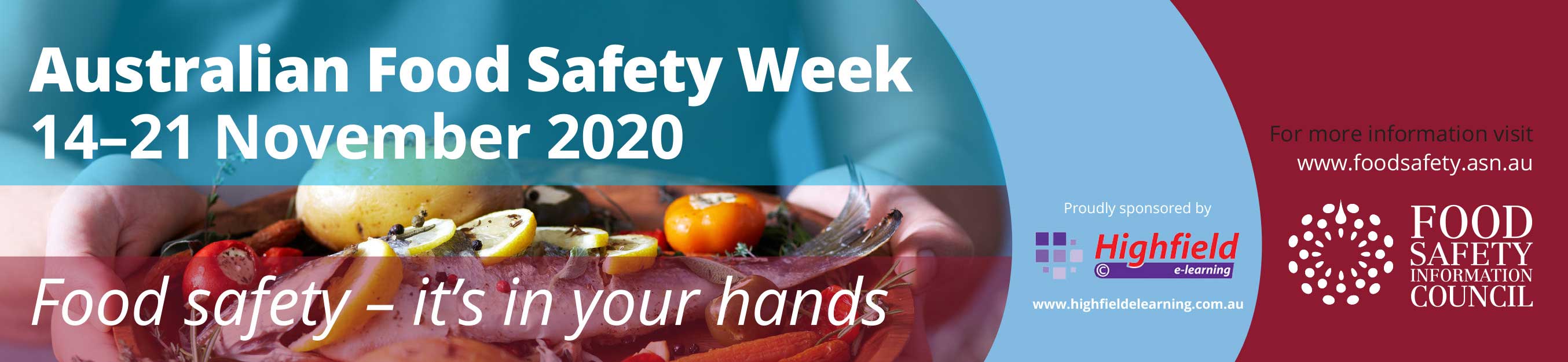
Australian Food Safety Week 14 -21 November 2020 | Food poisoning – it’s in your hands

For businesses in the food industry, food poisoning is a serious business. During this year’s Australian Food Safety Week, TQCSI is urging consumers to take food poisoning seriously and maintain good hygiene habits.

As part of Australian Food Safety Week, TQCSI today urged local consumers to take food poisoning seriously.

This year for Australian Food Safety Week 2020 we will be building upon the good consumer behaviour established during the COVID-19 pandemic so we can continue to reduce the amount of foodborne disease.

Five Food Safety Tips

We’d like people to continue the good work by following these 5 simple food safety tips:

  • CLEAN – wash hands with soap and running water before handling food and between handling raw foods and ready to eat foods, wash up regularly, especially items which have been used for raw meat and poultry, and keep the kitchen surfaces & fridge clean.
  • CHILL – keep the fridge at 5°C or below, refrigerate any leftovers as soon as they’ve stopped steaming and use within 2-3 days (or within one day for people at higher risk of foodborne illness including pregnant women, the elderly, and those with compromised immune systems) or freeze them immediately.
  • COOK – use a thermometer and cook poultry, sausages, minced or stuffed meat dishes to 75°C in the centre; be aware of the risk of raw or minimally cooked egg dishes or look for the new pasteurised eggs. Follow any cooking instructions on the food packaging. Remember, microwave ovens can cook unevenly. Make sure you follow the recommended stirring and standing times before serving.
  • SEPARATE – prevent cross contamination, especially between raw meat, seafood, fish or poultry and ready to eat foods like cooked meats, desserts and salads.
  • DON’T COOK FOR OTHERS IF YOU HAVE GASTRO or feel unwell – you could make them sick too – so ask someone else to cook or get a takeaway.

See more information about food safety advice for the general public at the Food Safety Information Council’s website.

Food Safety Information Council - Safety Week banner  - FSSC 22000, HACCP, ISO 22000

Looking to get Help with Food Safety Certification?

TQCS International (TQCSI) is a fully accredited, third-party certification body providing auditing and certification of international management system standards, particularly for:

  • Food Safety (FSSC 22000ISO 22000, and HACCP)
  • Quality (ISO 9001)
  • Environmental (ISO 14001)
  • Safety (ISO 45001)
  • Asset Management (ISO 55001) and
  • Information Security (ISO/IEC 27001).

If you are looking for assistance with food safety certification, call TQCSI today to discuss your requirements.

Meeting the challenges of building resilience and security in your supply chains

COVID-19 has demonstrated that global supply chains are not as resilient as once thought. How do you build resilience and security into your supply chains to ensure you can keep operating when the unexpected happens?

As the Australian Prime Minister and Treasurer progressively announce the details of the plans to help Australia recover in a post COVID-19 world, two key themes are emerging: resilience and security.

The progressive globalisation of trade has had many benefits but, as the pandemic has demonstrated, global supply chains are not resilient to a range of risks, including the curtailment of air transport and other restrictions that affect the movement of people and supplies. As well as global pandemics, many nations have also demonstrated their willingness to use trade sanctions as leverage to influence foreign and domestic policy agendas.

Governments and organisations are struggling to rapidly develop and deploy effective strategies and tactical responses to address these risks. As the saying goes, any chain is only as strong as its weakest link.

Business Continuity and Risk Mitigation

TQCSI is working with many organisations that have rapidly evolved their business continuity and other plans to address both risks and opportunities arising from these challenges.

For many companies, certification is either required by customers for current contract or is a key differentiator when bidding for new opportunities. For most, certification is also a risk mitigation to ensure they are protecting their organisation, staff, customers and the general public from a range of risks ranging from safety and environment to information security.

Global and Local Supply Chains

The global aviation market and, particularly, the civil airlines and their supply chains have been dealing with unprecedented restrictions and downturns in business. For many, this has also posed practical challenges in attaining or maintaining certification to quality, safety and other standards. These range from financial challenges to the inability of staff to travel and physically perform work, including internal and external audits.

Many companies are now increasingly looking to source locally, particularly where they are dependent on overseas suppliers. As one correspondent aptly said “Now is the time to use it or lose it.”

The Largest JASANZ accredited Certification Body in Australia

As the only Australian Certification Body accredited to the Aviation, Space & Defence Standards (AS 9100), TQCSI has the largest pool of highly trained aerospace auditors in Australia. Moreover, as the largest JASANZ accredited certification body in Australia, TQCSI has extensive capability to provide local auditors in multiple other standards, often without the requirement to travel interstate.

We were also the first accredited Certification Body to deliver remote auditing where travel and other restrictions required greater flexibility.

ISO Certifications and Supplier Audits

For our clients, this has enabled cost-effective continuity of certification in quality, safety, environmental, information security and other standards throughout the pandemic. Many have commented on the importance of having highly professional, local, responsive and cost-effective suppliers to meet their certification needs. We have also been able to provide supplier audits for companies needing local auditing capacity to augment their own teams, particularly with the ongoing interstate and other travel restrictions.

We stand ready to help Australian businesses build the resilience and security of their supply chains. Why not reach out to us today to find out how we can help your business and provide you with a free, no-obligation quote.

AS 9100 Series FAQs

Are you considering becoming certified for AS 9100 to enter the Aerospace and Defence industry? Planning for this undertaking can raise many questions. Here, we answer the most common questions our assessors receive when helping clients prepare to achieve this certification.

Whenever AS 9100 standards are considered by a company, that need usually comes from a previous business target: to enter the Aerospace supply chain, or to expand further into it. Before organisations can upgrade their certification capabilities, several topics need to be clarified during the planning stage. Find below a list of frequent questions our clients ask when preparing to achieve an AS 9100 series standard.

We’re looking to enter the Aviation, Space and Defence markets. Which standards are most applicable to these sectors?

For quality, ISO 9001 is by far the most widely used standard in the industry but for the very high standards and safety criticality required in the Aviation, Space & Defence markets, the AS 9100 Series of Standards are used and mandated by many of the Primes, particularly in Aerospace.

What are the AS 9100 Series Standards?

These Standards have been developed specifically for the Aviation, Space and Defence sectors and are led by the aerospace industry. They build directly on ISO 9001 for quality as a foundation and add around 150 additional requirements reflecting the higher standards required in safety-critical industries. Similar type standards exist in other industry sectors, such as automotive and oil and gas.

What standards are there in the AS 9100 Series, and which one is right for my company?

There are three standards:

  • AS 9100: applies to companies who manufacture products – typically the Prime OEMs (Original Equipment Manufacturers) and their suppliers. This is the most widely held standard.
  • AS 9110: was developed for companies who service and repair equipment, often called MROs (maintenance, repair and overhaul).
  • AS 9120: for distributors of equipment – companies who buy, sell and distribute aviation, space and defence equipment.

We already have ISO 9001. What kind of areas would we have to focus on to meet the AS 9100 Series Standards?

  • Ensuring full traceability of parts – from raw material through to the finished, tested products, and subsequently throughout their life in service, and preventing the use of potential counterfeit parts or material
  • Configuration management – to ensure that the correct parts, tools and equipment are always used
  • Calibration and recall – ensuring that tools and measurement methods are fit-for-purpose and that processes enable control, traceability and recall of any components that may be out-of-specification
  • Product safety – ensuring products perform to their intended purpose. Safety aspects include foreign object damage (FOD) prevention, Tool Control, effective maintenance, control of life-limited parts and airworthiness management.
  • Staff – a major element of the standards is ensuring staff are trained, competent and fully understand and work to the required standards, with clear processes for change control, authorisation, certification and control and disposal of nonconforming products.

The overall aim of the Standards is to ensure that every component that leaves a facility is fully compliant with all relevant customer and regulatory requirements, and fit-for-purpose.

We already have AS 9100 certification. Can we change to another Certification Body to audit us?

Yes, there are processes in place to enable customers to change their Certification Body at any point in the 3-year certification cycle.

Does the AS 9100 Series Standards replace the need for other standards?

As they build directly on ISO 9001, companies must be certified to both ISO 9001 and the respective AS 9100 standard. They are also designed to work with, and complement, other standards such as ISO 14001 for Environment Management Systems, ISO 45001 for Safety Management Systems and ISO/IEC 27001 for Information Security. It is common for companies to be certified to multiple standards depending on the needs of their business and customer requirements.

This is a useful overview, but I need more advice to get started. Can I speak to someone?

Absolutely! We are always happy to talk through options and requirements with no obligation to proceed and can provide free quotations for any standards you may be interested in. Please phone us on Freecall 1800 686 739 or email us at: [email protected].

If you didn’t find your answer here, contact us. We will gladly clarify any questions you might have, free of cost.

Know more about the ASD Quality Management Systems ( AS 9100, AS 9110, AS 9120)

Promoting Wellness and Connection at TQCSI: Introducing Our Social and Wellbeing Committee

At TQCSI, we believe that a happy and healthy workplace is the foundation for success in business. 

Our Social and Wellbeing Committee plays a vital role in fostering a positive environment where team members can thrive, both personally and professionally. Through a range of initiatives, we are committed to promoting wellbeing, teamwork, and a strong sense of community across our organisation.
 

What We Do

The Social and Wellbeing Committee organises activities and events aimed at encouraging connection, promoting mental and physical health, and providing opportunities for relaxation and fun. From team-building exercises and wellness workshops to charity events and social gatherings, we strive to offer something for everyone.

Our key initiatives include:

  • Wellness Challenges: Encouraging staff to stay active through group fitness challenges, workshops, and healthy lifestyle tips.
  • Social Events: Bringing the team together with casual get-togethers, themed events, and celebrations of milestones and achievements.
  • Community Engagement: Supporting causes close to our hearts by organising charity fundraisers and volunteer opportunities.

Why It Matters

We know that a healthy and happy team is more engaged, motivated, and productive. The committee’s work helps foster a culture of care and inclusivity, where everyone feels valued and supported. By creating opportunities for team members to connect, recharge, and give back to the community, we’re helping to build stronger relationships and a more resilient workplace.